 Written by: Spec. Dr. Tuba Çelebi Kayhan, Dermatologist
Published:

Short answer
Botox in Denizli is a treatment in which small doses of botulinum toxin are injected with a fine needle into the muscles behind forehead, frown and crow's feet lines. It takes 10-15 minutes, starts working in 3-4 days, settles in 10-15 days and lasts 4-6 months on average. Spec. Dr. Tuba Çelebi Kayhan performs it at her clinic in Denizli.
At a glance
| Treatment time | 10-15 minutes (after about 20 minutes of numbing cream) |
|---|---|
| When it starts | 3-4 days, final result at 10-15 days |
| How long it lasts | 4-6 months on average |
| Back to daily life | Same day; no facial massage, make-up or bending over for the first 1-2 hours |
| Performed by | Spec. Dr. Tuba Çelebi Kayhan (dermatologist) |
Botox is one of the most requested treatments in aesthetic dermatology, and at our clinic in Denizli it is among the first things patients ask about. What decides the result is less the product itself than which muscle is treated, at which point and with how much. That is why every Botox treatment with us starts with a consultation.
Which Lines Can Botox Treat?
Botox works on expression lines, the ones that deepen each time a muscle contracts. These are the areas we plan it for most often:
- Horizontal lines across the forehead
- Vertical frown lines between the eyebrows
- Crow's feet at the outer corners of the eyes
- Lines across the top of the nose (bunny lines) and vertical lines above the upper lip
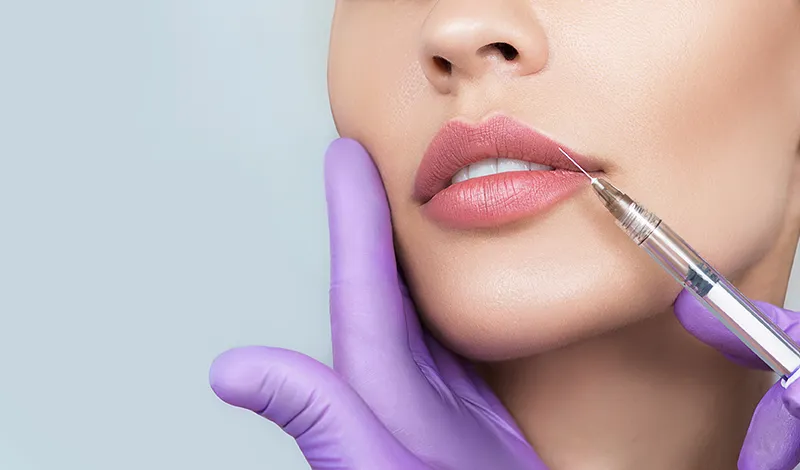
- A brow lift, lifting the corners of the mouth and a gummy smile, where too much gum shows when you smile
- Vertical bands on the neck
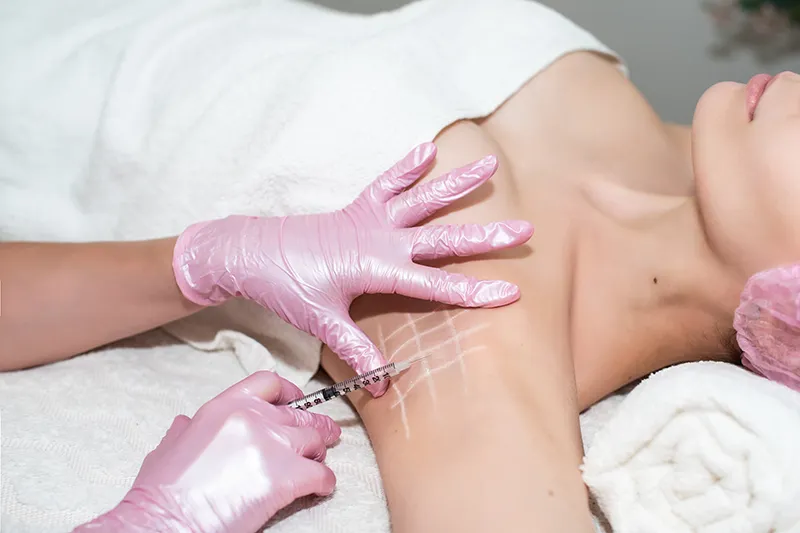
A square-looking face caused by enlarged jaw muscles, Botox for men and excessive sweating each need their own plan, and we assess them separately at your consultation.
How Are Forehead Botox and Frown Line Botox Planned?
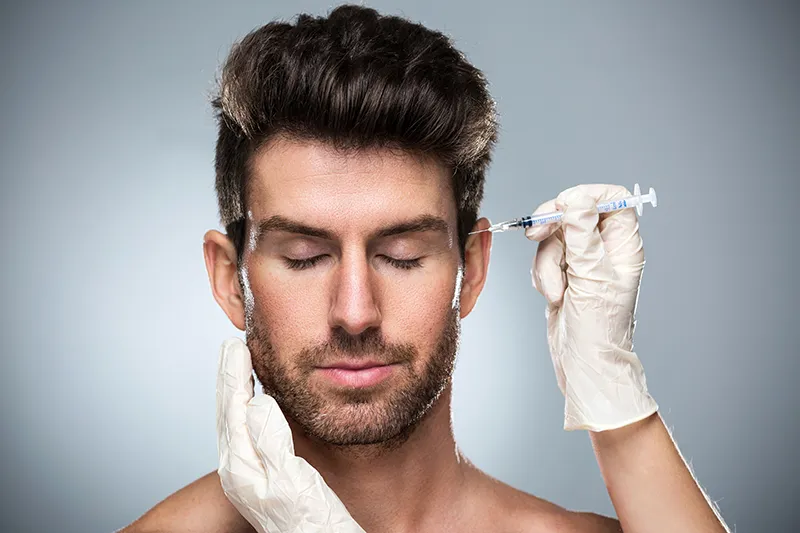
With forehead Botox, keeping your eyebrows in their natural position matters as much as smoothing the lines. The forehead muscle is the one that raises the brows, and too high a dose can make them feel heavy. For this reason we usually plan the forehead and the area between the brows together, with balanced doses.
Frown line Botox softens the vertical lines that appear when you knit your brows. This area plays a large part in making a face look tired or cross, and the right dose gives a more rested look.
Does Crow's Feet Botox Change Your Smile?
Not when it is placed at the right points. Crow's feet Botox softens the fan of lines that spreads from the corner of the eye when you laugh. To keep your smile natural, we work around the eyes with very superficial, small doses.
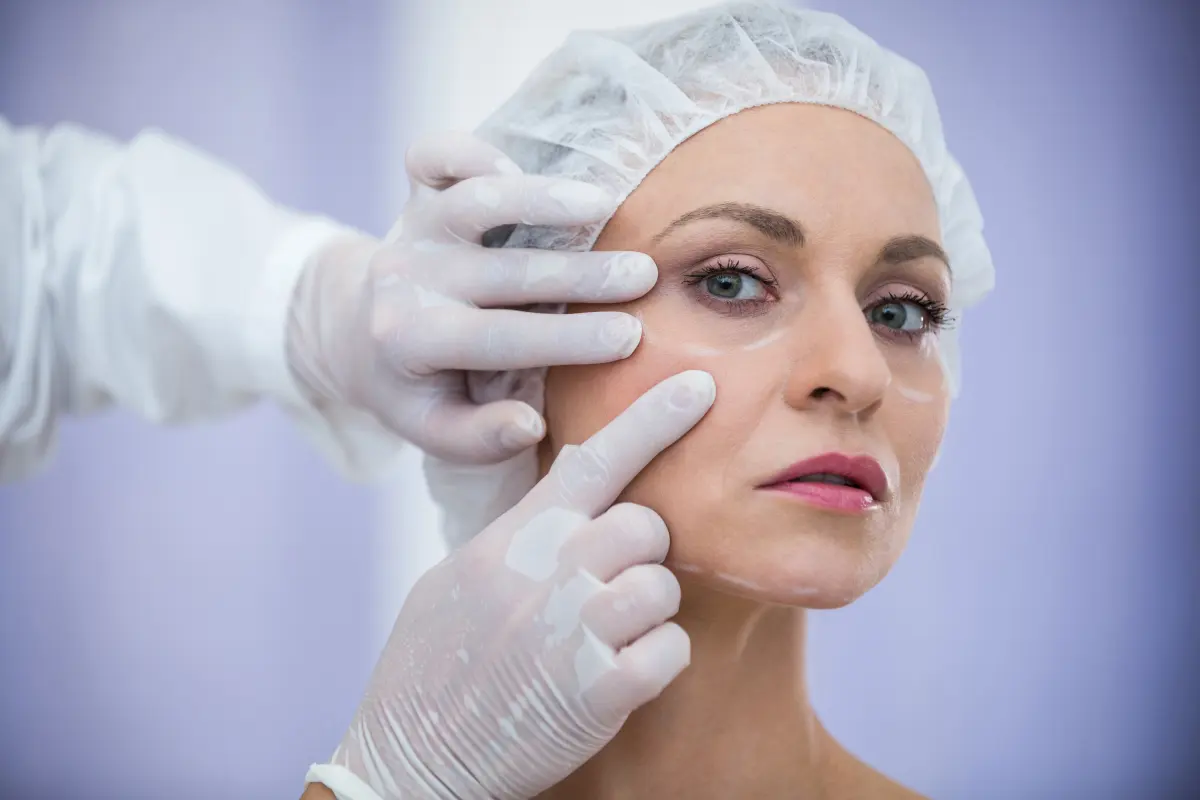
What Happens During a Botox Treatment at Our Clinic?
- Consultation: we look at your expressions both in motion and at rest, and ask about your medical history and any medicines you take.
- Planning: we decide on the areas and doses and talk through what you expect.
- Preparation: your skin is cleansed and a numbing cream is applied about 20 minutes before the injections.
- Treatment: small doses are injected into the muscle with very fine needles. This takes 10-15 minutes.
- Review: once the effect has settled, we assess the result together.
Does Botox Hurt?
Because we use numbing cream and a very fine needle, most people tolerate the treatment well. What you feel is a brief prick. If you are nervous of needles, we adjust the pace of the injections and the pauses between them.
What Should I Do After Botox?
For the first 1-2 hours after treatment we advise you not to wash your face, put on make-up, massage the area, bend over or lie down. After that you can go back to your normal routine.
Can I exercise after Botox?
We recommend resting from strenuous exercise on the day of treatment. You can return to your usual sport from the next day.
Will I bruise after Botox?
If the needle meets a tiny blood vessel, a small bruise may appear at the injection point. These bruises fade on their own within a few days.
When Does Botox Start Working, and How Long Does It Last?
The effect begins 3-4 days after treatment and reaches its final form in 10-15 days. How long it lasts depends on you, the area and the dose, but the average is 4-6 months. When the effect wears off, the area returns to how it was before; the change Botox makes is temporary.
We have observed that the effect tends to last longer when the same area is treated at regular intervals. We set the date of your next treatment together at your check-up.
What Are the Risks and Side Effects of Botox?
Botox has been used for many years for both medical and cosmetic purposes, and when it is given correctly its safety profile is well known. Even so, like any medical procedure, it can have some unwanted effects:
- Short-lived redness, mild swelling or bruising at the injection site
- Rarely, a temporary droop of the eyelid or eyebrow
- Headache
Botox is not recommended during pregnancy or breastfeeding, or with certain muscle and nerve conditions. That is why we ask about your medical history in detail at your consultation.
Choosing a Botox Doctor in Denizli: What Should You Look For?
Botox may be an injection, but it is a medical treatment and it requires a sound knowledge of facial anatomy. When you are looking for a Botox doctor in Denizli, these questions are a useful guide:
- Is the person giving the injections a doctor, and is their field dermatology or a related specialty?
- Is there a consultation and a review of your medical history before treatment?
- Are you shown the box of the product, and is it licensed in Türkiye?
- Are you given a follow-up appointment after the treatment?
At our clinic, Botox is given in person by our dermatologist, Spec. Dr. Tuba Çelebi Kayhan, who also carries out the follow-up visits. Before treatment we show you the product we will use, and we record the areas and doses in your file so that your next treatment can be planned from that record.
What Is the Difference Between Botox and Fillers?
Botox relaxes a muscle; a filler replaces lost volume. Because Botox is not a filler, it does not add fullness or puffiness to the treated area. Botox suits lines that form with movement, while fillers come first for deep lines that remain at rest and for volume loss. The two can also be part of the same plan.

How Often Should I Have Botox?
Because the effect fades after 4-6 months on average, treatments are usually repeated at about that interval. We do not repeat Botox too often before the effect has fully worn off; giving the muscle time to recover between treatments is part of keeping a natural look. We decide on the timing of your next session together, based on how quickly your lines come back.
If you notice your lines returning quickly, tell us at your follow-up visit. It helps us change the dose or how it is spread across the areas in your next plan.
Is Botox Different for Men?
Yes, the plan is different. Men usually have stronger forehead and frown muscles, so the dose they need is often higher. The brow position differs too: in a man's face the eyebrow sits flatter and an arched brow is not wanted. We choose the injection points to suit this facial structure and keep the result natural and in keeping with the face.
At What Age Can You Have Botox?
It is the state of your lines, not a particular age, that decides. In adults who use their facial expressions a lot and are bothered by the lines, starting before the lines deepen gives a better result. Once lines are set in, a filler may need to be added to the treatment.
Botox Prices in Denizli 2026
Botox prices vary from person to person. Rather than quoting a single figure before your consultation, we would like to share what affects the price:
- The number of areas treated (the forehead alone, or the forehead, frown lines and crow's feet together)
- The total dose your muscles need
- The product used
- Whether a top-up is needed at your follow-up visit
We confirm the plan that suits you and its price after your consultation. For initial information, give us a call.
How Do I Book a Botox Appointment?
- Call us or send a WhatsApp message to choose a day that suits you.
- Bring a list of the medicines you take; coming without make-up makes the assessment easier.
- The plan and price are discussed at the consultation; if Botox is suitable, it can be done the same day.
- Book your follow-up visit for once the effect has settled.
Common Myths About Botox
"You can't smile after Botox"
When the dose is adjusted to you, your expressions are preserved. A frozen look comes from too high a dose or injections in the wrong place.
"Once you start, you can never stop"
When you stop having Botox, the effect wears off gradually and your face returns to how it was. Stopping does not make your lines worse than before.
"Botox plumps the face like a filler"
Botox does not add volume. If you want fullness in part of your face, that is a separate treatment done with a filler.
Botox works by temporarily blocking the signal from nerve to muscle, and this same property underlies how Botox works and its medical uses.